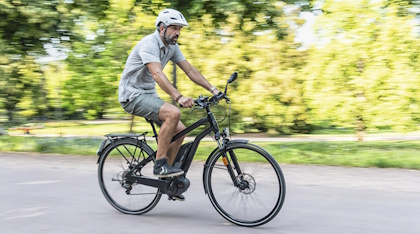
Many keen cycle commuters will want more than one bike for their commute to work and whilst two bikes might seem excessive, it is important to understand the reasons behind the requirement to have more than one bike.
Below are some examples where two bikes are definitely better than one.
Scenario 1
When the weather is calm and dry, a commuter will use an electric bike for longer, hillier journeys. However, in the colder, wetter months they’ll opt for a journey that combines cycling with public transport, in which case a folding bike would be ideal. Folding bikes pack down so you can store them neatly when on the train or bus.
Scenario 2
Depending on the season, a commuter will probably want to adjust the route they take. During the summer months when daylight hours are longer, a cycle route may include canal paths or go across parkland for which a gravel or hybrid bike is ideal. But in the autumn and winter, the route might become more straightforward and include roads and high-quality commuter cycleways, where a road bike is more suitable.
Scenario 3
When the commuter is part of a family unit that wants to cycle more, a cargo bike for school runs is essential. However, on days where there isn’t any precious cargo to move around, a standard ebike will be more practical.
So, the answer is yes, you can get more than one bike through the Cycle to Work Scheme, however there are some caveats.
The Cycle to Work Scheme guidance document published by the Department for Transport does not state a limit on the number of bikes that can be acquired through the scheme. However, employers need to carefully balance the demands of their business against the mission to get more employees cycling to work. Therefore, an employer may introduce a limitation on both spend and the duration of the salary sacrifice period. Whilst this reduces the risk to the employer, it may mean that two cycles simply aren’t possible through the scheme.
If the spend limit prohibits two bikes, it may be possible to get the first bike, complete the salary sacrifice and then get the second bike on a new salary sacrifice agreement the following year. This will allow you to evaluate your trip and determine the best use for a second bike. For advice on which bikes are best for commuting, check out Bike Radar’s guide.
Take charge of your commute with Green Commute Initiative
Whether you’re looking to improve your health, reduce travel costs or make a more environmentally friendly choice, cycling to work can offer a practical alternative to your usual journey.
And you don’t need to make the switch alone.
Green Commute Initiative is a social enterprise dedicated to helping more people access affordable cycling through the Cycle to Work Scheme.
With no scheme fees, no upper spending limit imposed by GCI and access to a wide range of bikes and accessories, we help employers and employees make cycling a more accessible option.
Ready to take charge of your commute?
Discover how our Cycle to Work Scheme for Employees works, or use our savings calculator to see how much you could save on your next bike.
FAQs about Salary Sacrifice
What is salary sacrifice?
Salary sacrifice is a voluntary agreement whereby an employee agrees to give up a portion of their gross cash salary (for an agreed period of time) in exchange for a non-cash benefit provided by their employer. When looking at the Cycle to Work Scheme, you are agreeing to reduce your cash salary in exchange for a Cycle to Work Scheme voucher which entitles you to the use of a bicycle.
How is salary sacrifice paid for?
A Salary Sacrifice Agreement outlines the monthly salary deductions and the time period over which they will be taken. Once signed, your employer will automatically make monthly salary reductions from your gross pay (pre-tax salary).
How do I save money through salary sacrifice?
Salary sacrifice payments are taken from your gross salary. This means the amount of your salary subject to income tax and National Insurance has been reduced. Put simply, you will pay less tax.
How much will I save through salary sacrifice?
The amount you save is entirely dependent on your personal tax circumstances and which tax band you fall into. A basic rate taxpayer will save 28% and this rises to 47% for additional rate tax payers (correct as at October 2026). Tax bands are explained on HMRC’s website.